

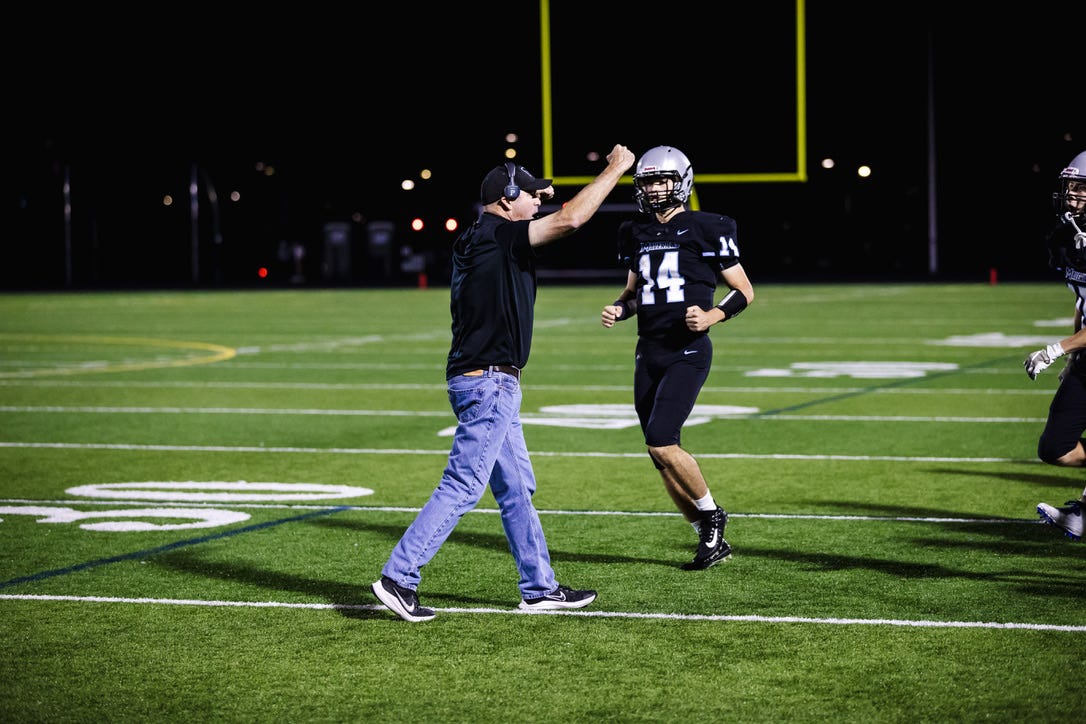
Welcome to the June edition of the Coaches Playbook! I hope your summer workouts are going well…..these next 5 weeks are such a valuable time to get physically ready, refine your schemes and fundamentals, and build chemistry for the season that is fast approaching! The optimism and energy around the team always made it a great time to be a football coach!
This month’s Playbook includes:
* Keys to having a great practice
* Interview with longtime Div. I Offensive Coordinator (OSU, Nebraska, Colorado, Temple) and current Oregon State coach Danny Langsdorf discussing offensive football and play-calling
*Lead up to the Season Part II: Preparing your Coaches
*Video Link: All Time Favorite Plays - Part I - “Siebe Screen”
*Subscriber Spotlight & more
I am proud that our distribution list continues to grow to coaches all around the country. Welcome to those who may be reading for the first time……it is my goal to make the Coaches Playbook a monthly resource for coaches with articles, interviews, and videos on all aspects of building a successful team. I would like to thank all of you who are paid subscribers and encourage those that are not to consider the $5/month subscription. All the previous 26 editions are archived for paid subscribers. There is a subscription bar located further down in the edition. Thanks to all of you who read each month, I am excited to continue to try to make it a helpful resource to coaches of all levels of experience!
JM
Running a Great Practice
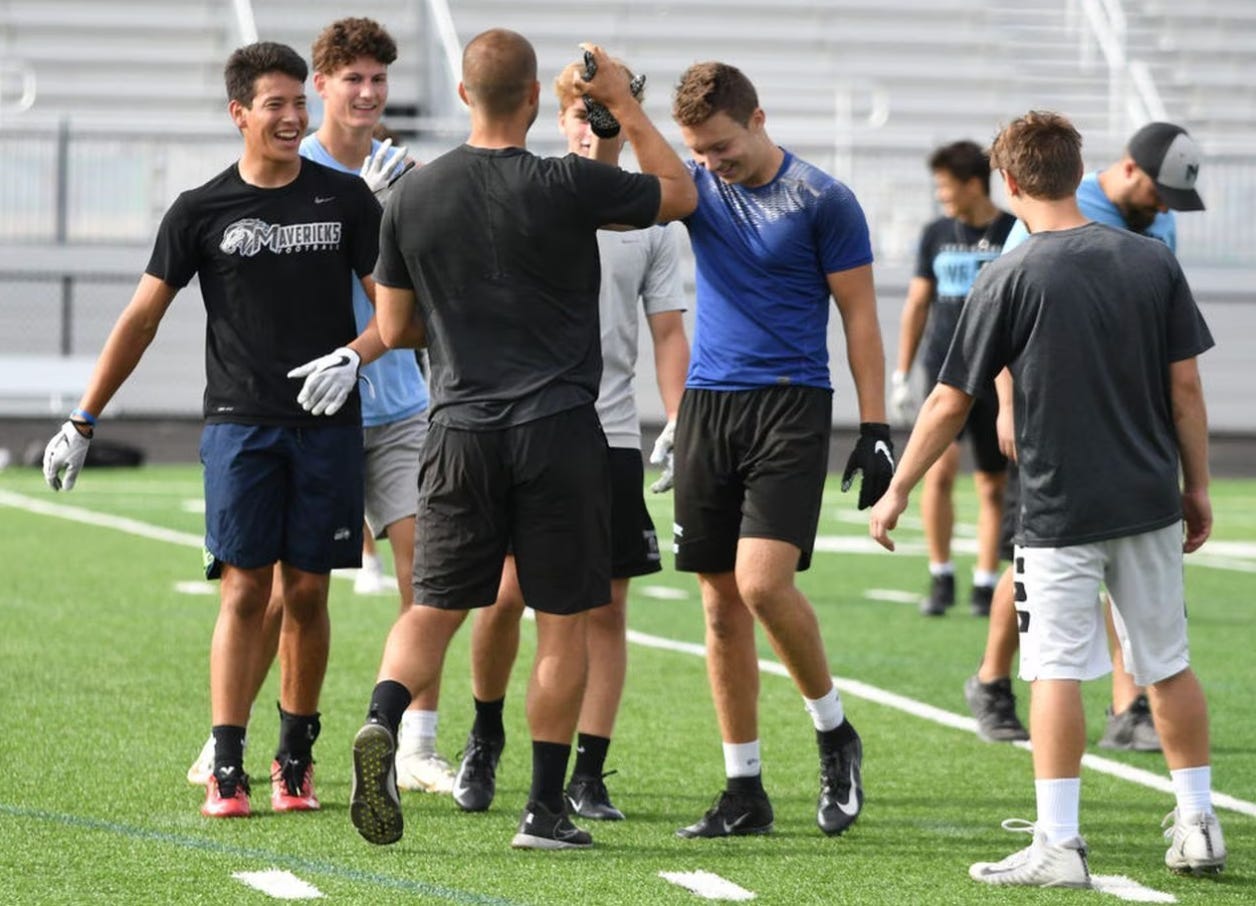
During my many years as a high school coach, I would often tell my players that I liked practice much more than the games, and I truly meant it. I enjoyed the process-oriented nature, engagement of the entire team, and shared experience for the players that can only come through a football practice. There was nothing like leaving the field knowing that it had been a “good practice”. It isn’t something quantifiable or proven by analytics, but rather something a coach can feel when it has been successful. While not every practice will be great or even good, I would like to discuss with you what I believe are the ingredients that make a practice great.
A great practice begins well before you hit the field. The practice plan must be very intentional and your coaches must be prepared and focused. During his time as Head Coach at Stanford in the mid-1990’s, I heard Bill Walsh speak at a football clinic about practice planning. He said that each offseason while he was both in college and the NFL, he would ask each of his position coaches to make a list of all the skills a player needed to play their respective position. He would do the same exercise and then sit down with the coach to review and refine their lists. He would then instruct them that “everything you do in practice must be directly off your list.”
His point was that each individual, group, and team period should translate to and help you win games. This type of focused practice requires planning, evaluation, and attention to detail. Heading in to summer and fall camp is a great time for each position coach to have a checklist of skills their players will need as well as the drills to develop each skill. It is important to continually refer to this list in order to make sure all areas of the position are getting adequate attention. Looking back, I realize that I would often default to the drills our players were really good at because it made practice run more smoothly. I would encourage you to allocate time to all areas of each position in order to ensure that you cover the skills that are not as clean but will be equally as important on Friday night in the fall!
Another trait of a good practice is the energy level of your team. The difference between a team that has a bounce in their step versus one that is dragging is palpable to a coach. The reality of a season is that there may be times whether in the middle of camp, an especially hot day, or the first day of school where the players energy level may wane so it is important to help them create their own energy. I believe that this starts with the coaches as the players will follow your lead. When coaches arrive early to the field, connect with players individually, and show a sense of urgency themselves, it can significantly boost the team’s energy level. Another helpful strategy is to have a “tone setter” drill for the beginning of practice to get them moving and get the energy up. This can be a team agility circuit or short team/competitive period to get them going. I would often start practice with “offense vs air period” in which our entire team would gather in the back of the end zone and be stacked into 3 offensive groups. The first offense would run a play from the goal line going out, with all 11 players executing the play and then sprinting to the 20-yard line. I would then call out another play for them to run, followed by a sprint to the 40. As soon as the first group left the 20, the second would follow with the same play and then the third would follow suit, so you would end up with the entire team moving up and down the field not only getting valuable reps but getting a sweat going as well. The “extra” guys not in the first 3 offenses would be on the sidelines and would sprint 20 yards each play to stay with the group. We would march up the field and back taking about 5 minutes of time, finishing in the end zone and immediately break to our next drill. It became a valuable, full speed drill that didn’t allow players to “ease” in to practice.
Another way to boost the energy of practice is to keep the periods “short”. As a coach, you can feel when an individual or team period begins to drag and often with it the quality of the reps. This isn’t to say you should shorten practice as there is so much to prepare for each week, but you can arrange your practice periods into shorter periods making it easier for the players to retain energy and focus.
When I first was coaching at Foothill High School with Matt Sweeney in the mid-1990’s, we would practice special teams, followed by offense and then finish with defense. However, we often found that our 20 minute team defensive period at the end of practice would drag and deteriorate, so we began breaking it into smaller team segments with a team defensive period at the beginning and another at the end, sometimes even adding a third period in the middle. We were still allocating the same amount of time but we found each of those periods were much more crisp and productive as opposed to one longer period. I encourage you to consider your practice routine and see if there may be ways to plan it that allow the vital energy level of the players and coaches to not drop.
Finally, I feel that a huge ingredient of a great practice is efficiency. With so much development needed each day to be successful, it is crucial that you squeeze every available minute out of your practice. This requires that your coaching staff is on point throughout the practice. For example, during our daily punt team practice, our OL coach would have his group not involved in the punt team off to the side stealing an extra 5 minutes of individual work. Likewise during PAT/FG time, our QB & WR’s were getting extra work on routes or special plays for the week.
Your goal should be to never have groups of players milling around on the sideline, they should be doing something. Create a culture where coaches and players are embracing and taking advantage of every moment. I believe one commonly missed opportunity for quality instruction is during scout offense and defense periods. Younger, less experienced players can grow so much with these reps during this part of practice if they are receiving constant feedback and coaching. It is also a great time for younger coaches to take ownership of a group and give real purpose and pride to the scout teams. If your defensive coaches stand together behind the play and take their foot off the gas during a team offense period, it gives the guys on the scout defense the message that this isn’t that important. It is key that coaches are involved and engaged with all players on the team.
Entering my third season of retirement after 35 years, I have to say that the thing I miss most is going out to practice each day with my coaches and players. While the games are certainly exciting and intense, I have always believed that practice is where the real magic happens!
Interview With Long-time FBS Offensive Coordinator Danny Langsdorf
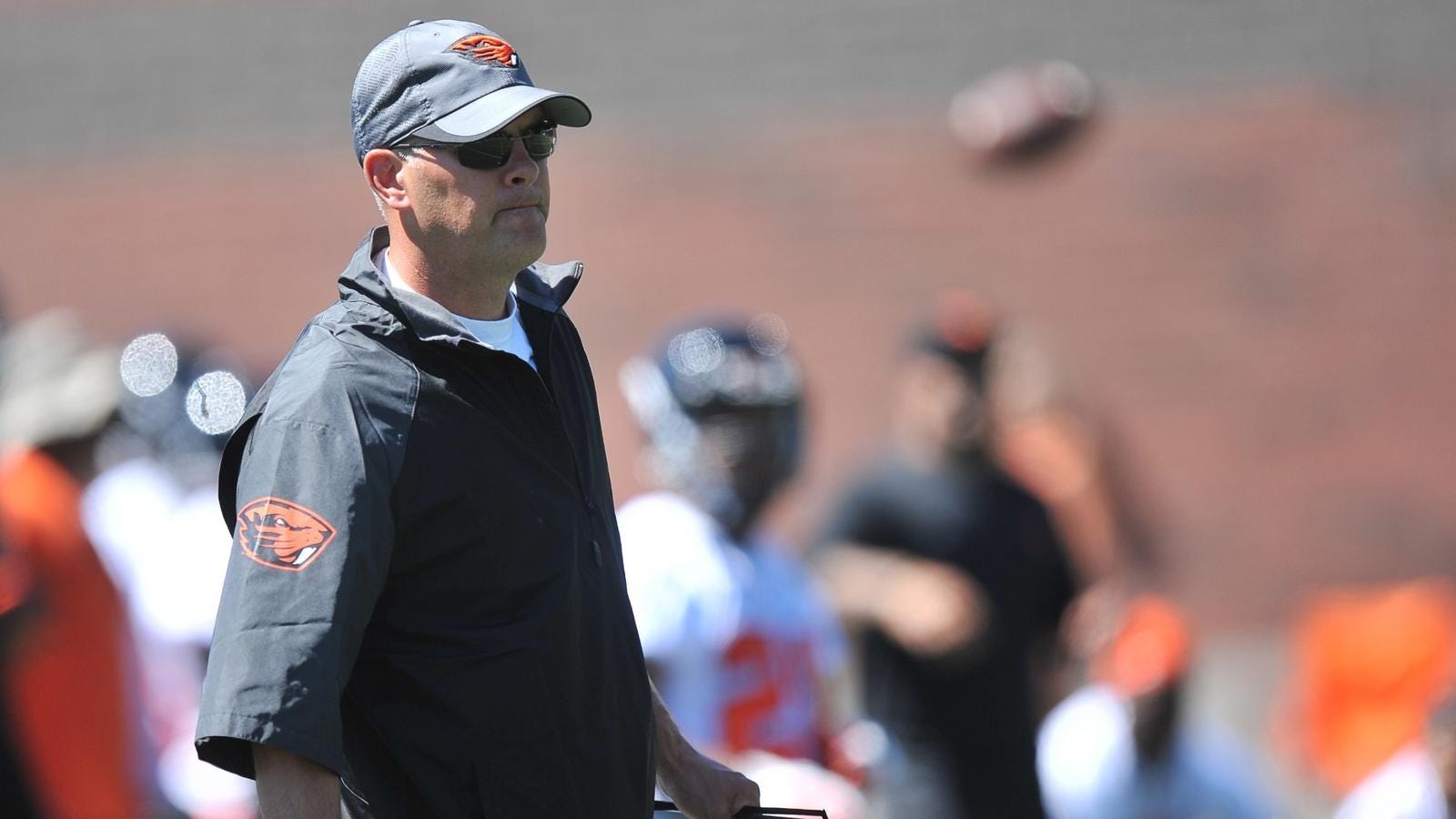
Danny Langsdorf has been coaching offense in Division I Football for 29 years and is currently on the offensive staff at Oregon State. Between 2005 and 2017, Coach Langsdorf was Offensive Coordinator for Oregon State and later Nebraska and has also had coaching stops at Oregon, Colorado, and Temple. Not only a highly respected play caller, he is a great guy! Thanks Coach for sharing your wisdom with our readers!
Question: First off Coach, are there a couple of core beliefs that you have arrived at that you believe are keys to having a successful offense?
DL: I think there are a couple of things. The first is that you have to have the ability to both run and pass, you need to have balance. If they are taking something away, you need to have something to go to. Secondly, is being able to protect the QB. You need to have a solid plan and it doesn’t need to be a lot of stuff. If you have a team that is really pressuring the QB and you don’t have a decent answer or way to protect him or get the ball out of his hand quickly, it can make for a long day. I know there are systems that rely heavily on running the ball or throwing the ball, but the best I have felt about our plans is when we have had good balance between the two as well as good pass protection. I would say those two are the most critical.
Question: At the high school level, talent and experience level can really differ from year to year. Is there any advice you would give to a coach as they try to piece together an offense each season?
DL: While you may need to be flexible within your system, I wouldn’t try to drastically change from year to year. Skipping around from Wishbone to complete Spread to Wing T to Air Raid is too drastic in my opinion. Make sure you choose to do something that your players are capable of doing. I think it starts with the QB. If he can throw the ball, then the question is do you have good targets, a good RB or TE? Try to feature the strengths of those guys rather than the system. Identify your best players and find sound, creative ways to get them the ball. I would suggest not drastically overhauling your system as much as finding ways to get your best players the ball in their hands. You have to be smart about crafting a system that provides flexibility. If you don’t have a big time RB, then trying to run 40 times might be really difficult. If you have a smaller OL, you may need more pulling and movement than the downhill power. You should really focus on the players that you have.
Question: If there was a high school offense that may be lacking playmakers and was really struggling to get anything going, are there things that may help getting things turned around?
DL: The first thing is to get back as quickly as you can to something you know they have had some success with. Building confidence through a quick completion or a run play that has been successful can allow you to tell your players, “this is something that has been good for us.” Another thing that has helped me is changing the pace of the game such as using tempo or going into a simplified 2 minute attack. It is also important to have common sense. If you have been cranking deep balls and quickly going three and out, you should go to a quick pass, quick hitting run play or screen pass in hopes of giving your group some confidence. Be careful not to do too many new things, try to build confidence by getting back to basics.
Question: What advice would you give on in-game play-calling?